Gut Health Supplement Pills: Psyllium vs Glucomannan for Fullness
Quick Answer: Which Fiber Keeps You Fuller?
Glucomannan forms the thicker gel gram for gram, so on mechanism alone it should win on fullness. In human trials the picture is less tidy: results for both fibers are mixed, effect sizes are small, and psyllium carries the larger and more consistent evidence base across digestive and metabolic outcomes. If you want one gel-forming fiber with the fewest unknowns, psyllium is the safer default; glucomannan is the more interesting bet with the weaker file behind it.
- Psyllium: husk of Plantago ovata, used in grams per day, long safety record, strong stool-consistency evidence.
- Glucomannan: konjac root fiber, extremely viscous, used in smaller gram doses, mixed weight-related results.
- Both: need a full glass of water, and neither works as an appetite switch on its own.

Two viscous fibers, two different gels
Both of these ingredients belong to the same functional family: soluble fibers that absorb water and thicken. What separates them is how much they thicken and how the gel behaves once it forms. If that distinction is new, the wider split between soluble and insoluble fiber for digestion is the background this comparison sits on.
Psyllium comes from the husk of Plantago ovata seeds. It absorbs many times its weight in water and forms a soft, spongy gel that stays largely intact through the gut. That last property is unusual and important. Most soluble fibers are heavily fermented and disappear; psyllium is only partially fermented, which is why it produces comparatively little gas while still holding water in the stool. That combination is what makes it the fiber most widely recommended for changing stool consistency in either direction.
Glucomannan is extracted from the root of the konjac plant. Weight for weight it is one of the most viscous soluble fibers in commercial use, capable of forming a thick gel from a small amount of powder. It is fermented more completely than psyllium, so it generates more gas, and its extreme water-binding is simultaneously the reason it is marketed for fullness and the reason it carries a safety warning that psyllium does not.
The mechanism proposed for both is straightforward. A viscous gel in the stomach slows emptying and increases the sense of distension; slower emptying also flattens the rise in blood glucose after a meal. Neither step is controversial. What is contested is how much any of it changes what a person eats over weeks and months, which is the only question that matters commercially.
Psyllium: what the human evidence actually supports
Psyllium has the deepest file of any fiber supplement, built over decades. The strongest and least disputed finding concerns stool: it softens hard stool, adds bulk and improves consistency, and it does so in both directions, firming loose stool by absorbing excess water. This is why it is a mainstay of clinical practice rather than a wellness trend.
The second-strongest area is cholesterol. Viscous soluble fibers bind bile acids in the gut, prompting the liver to draw on circulating cholesterol to replace them. US food labelling rules recognise soluble fiber from psyllium husk in an authorised heart-health claim category, with a qualifying daily amount measured in grams — not milligrams, which tells you immediately what kind of product can carry it.
On fullness specifically the evidence is thinner and more variable. Trials measuring appetite ratings after psyllium generally find modest increases in reported fullness (Brum et al., Appetite, 2016), but the translation into fewer calories eaten across a day is inconsistent. Studies also differ on timing, dose and whether the fiber was taken with water or with food, all of which move the result. The fair summary is that psyllium nudges fullness in the right direction for many people and does not abolish appetite for anyone.
Check what is actually in the serving
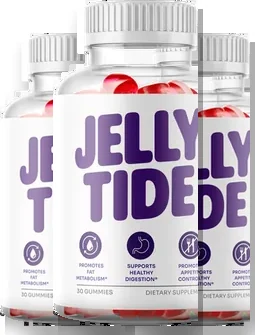
Working through the best gut health supplement brands is far quicker once you compare grams per serving instead of front-label promises. The complete JellyTide Supplement Facts panel, including the 525 mg blend, is transcribed on this site.
Check Today's OfferGlucomannan: a smaller and noisier literature
Glucomannan attracted attention because European regulators authorised a weight-related claim for it, conditional on a specific daily amount taken in divided doses with water before meals, and only in the context of an energy-restricted diet. That last condition is the part usually dropped in marketing, and it is the part that does most of the work.
The trial evidence behind it is genuinely mixed. Meta-analyses have reported small average differences in body weight compared with placebo (Onakpoya et al., Journal of the American College of Nutrition, 2014), with confidence intervals wide enough to include no effect, and the pooled studies are mostly short and small. At least one well-conducted randomised trial of glucomannan in overweight adults found no significant difference from placebo. That is not a reason to dismiss the ingredient; it is a reason to describe it accurately as promising rather than proven.
There is also a safety point that has no equivalent on the psyllium side. Because glucomannan swells so aggressively, regulators in several markets have required warnings about the risk of obstruction if it is taken with insufficient fluid, and tablet forms in particular have been restricted or withdrawn in some countries after reports of swelling in the throat or oesophagus. Taken as directed with a full glass of water, sitting upright, it has a reasonable safety record. Taken carelessly, it is one of the few supplement ingredients with a genuine mechanical hazard.
An ingredient with a strong mechanism and a weak trial record is not a scam. It is unfinished business. The honest thing is to say which of the two you are buying.
Head to head
The table sets the two against each other on the properties that decide whether either will suit you, including an honest column on how strong the human evidence is rather than how strong the mechanism sounds.
| Factor | Psyllium husk | Glucomannan (konjac) |
|---|---|---|
| Source | Seed husk of Plantago ovata | Root tuber of Amorphophallus konjac |
| Viscosity per gram | High | Very high |
| Typical daily amount in trials | Around 5 to 10 g, split across the day | Around 3 to 4 g, split before meals |
| Fermented in the colon | Only partially, so less gas | More completely, so more gas |
| Evidence for stool consistency | Strong | Limited |
| Evidence for cholesterol support | Moderate to strong | Moderate |
| Evidence for fullness and appetite | Modest and inconsistent | Modest and inconsistent |
| Practical forms | Powder, capsule, wafer | Powder, capsule, tablet, noodle |
| Main caution | Take with plenty of water; separate from medication | Obstruction risk with too little fluid; tablet forms restricted in some markets |
| Cost per effective gram | Low as powder, high as capsules | Moderate; less powder needed per dose |

Gut health supplement pills and what the capsule changes
Format is not a detail. It decides whether a product can deliver the amount the research used, and for gel-forming fibers the arithmetic is brutal. A capsule holds a fraction of a gram of powder. A daily amount in the region of five grams therefore means swallowing a large handful of capsules, several times a day, every day. Most people do not, which is why so many gut health supplement pills in this category quietly deliver a fraction of a studied dose while remaining perfectly legal.
Powder solves the dose problem and creates a compliance problem: it must be mixed, drunk quickly before it thickens, and it tastes of very little in an unappealing way. Capsules solve compliance and create a dose problem. There is no version that solves both, and any product implying otherwise is either using a much smaller dose than the trials or hoping you will not check. The same arithmetic decides the protein powder against fiber jelly comparison, where a scoop carries twenty grams and a jelly carries a fraction of one.
Gummies sit at the far end of this trade-off. A gummy weighs two to three grams in total, most of which is sugar, water and gelling agent, so a gram-scale fiber dose cannot physically fit. That is a structural fact about the format, not a criticism of any particular brand. It is also why shortlists for the best gut health daily supplement should always start by asking what the active ingredient is and how much of it the serving contains — the same discipline we apply to the label in our note on sugar alcohols and digestive tolerance.
For the product covered on this site, the position is simple and worth stating plainly. JellyTide is not a fiber supplement. Its panel declares a 525 mg blend of apple cider vinegar and beta-hydroxybutyrate mineral salts, with apple pectin present as the gelling agent that gives the gummy its texture. If fullness through fiber viscosity is what you are after, this is the wrong category; if you want to see exactly what the panel does declare, our label-first breakdown of JellyTide sets out the arithmetic.
How to use either one without wrecking your week
Four habits cover almost everything that goes wrong.
Water, every time. A full glass with each dose, upright, and not immediately before lying down or going to bed. This is not caution for its own sake: it is the specific circumstance in which gel-forming fibers cause harm.
Start low. Begin at roughly a third of the target amount for the first week. The gas that people blame on a product is almost always the speed of the increase rather than the ingredient.
Before, not with. The trials that report effects on fullness and post-meal glucose generally dose the fiber shortly before eating, which is when the gel has time to form. Sprinkling it into the meal is a different intervention.
Space out medication. Viscous gels slow absorption of whatever else is in the gut, including medicines. A two-hour gap is the standard precaution and costs nothing. If you take thyroid medication, diabetes medication or anything with a narrow therapeutic window, raise it with a pharmacist first.

What neither of these can do
Both ingredients are reasonable. Neither is what the more excitable corners of the market claim.
Neither is a weight-loss agent on its own. The authorised European claim for glucomannan is conditional on an energy-restricted diet for a reason: the fiber is an aid to a deficit, not a substitute for one. Trials that removed the dietary component tend to show very little.
Neither manages a medical condition. Nothing here diagnoses, treats, cures or prevents any disease. Persistent digestive symptoms, unexplained weight change, blood in the stool or new and lasting changes in bowel habit are matters for a clinician.
Neither compensates for a low-fiber diet. A supplement supplies one isolated fiber. Food supplies a mixture along with resistant starch, polyphenols and micronutrients, and the population evidence linking fiber intake to better outcomes is built on diets, not capsules.
Neither works quickly. Stool changes take days, appetite adaptation takes weeks, and anything advertising an overnight change in shape is describing fluid, not fat. If a promise sounds faster than biology, biology is not the thing that changed.
Medical note: this article is general wellness information, not medical advice, and it summarises published evidence rather than making a product claim. JellyTide is a dietary supplement, not a drug, and is not intended to diagnose, treat, cure or prevent any disease. Speak to a healthcare professional before starting any supplement, especially if you are pregnant, nursing or taking medication.
Frequently asked questions
Which keeps you fuller, psyllium or glucomannan?
Glucomannan forms the thicker gel gram for gram, so in theory it should win on fullness. In practice the human trial results are mixed for both, and psyllium has the larger and more consistent body of evidence overall. Neither produces a dramatic change in appetite on its own.
How much water do these fibers need?
A full glass with every dose, taken sitting upright and never immediately before lying down. Gel-forming fibers taken with too little fluid can swell in the throat or oesophagus, and regulators have required obstruction warnings on glucomannan products for this reason.
Are fiber capsules as good as fiber powder?
Usually not, because of arithmetic. A gram-scale daily dose needs several large capsules, so many capsule products deliver well under the amount used in trials. Powder is cheaper per gram and reaches a real dose more easily, though some people find capsules far easier to keep taking.
Do JellyTide gummies contain psyllium or glucomannan?
No. The published ingredient statement lists apple pectin as the gelling agent, alongside corn syrup, water, cane sugar, citric acid, sodium citrate, tapioca starch, natural flavours and beet root powder. The 525 mg blend is apple cider vinegar with BHB mineral salts, not a fiber dose.
Sources
- Brum JM, Gibb RD, Peters JC, et al. Satiety effects of psyllium in healthy volunteers. Appetite. 2016 Oct 1. PMID 27166077
- Onakpoya I, Posadzki P, Ernst E. The efficacy of glucomannan supplementation in overweight and obesity: a systematic review and meta-analysis of randomized clinical trials. Journal of the American College of Nutrition. 2014. PMID 24533610
- NCCIH (NIH) — Dietary and Herbal Supplements
- Harvard T.H. Chan School of Public Health — Fiber
- Mayo Clinic — Dietary fiber: essential for a healthy diet
Start with the panel
Whatever ends up on your shortlist, read the Supplement Facts before the sales copy. The JellyTide panel, blend total and suggested use are published on this site in full.
Check Availability