Gut Health Supplement Side Effects: Sugar Alcohols and Where the Limit Sits
Quick Answer: Where Does the Sugar Alcohol Limit Sit?
There is no single threshold, but there is a usable anchor: US labelling rules require a laxative-effect warning on foods likely to deliver roughly 50 grams of sorbitol or roughly 20 grams of mannitol per day. Most people notice gas, cramping or loose stools well below those amounts, and people with a sensitive gut can react to a fraction of them. Sugar alcohols cause trouble because they are absorbed slowly and incompletely, so what is left over pulls water into the bowel and is fermented by bacteria.
- Best tolerated: erythritol, most of which is absorbed and then excreted in urine rather than fermented.
- Least tolerated: sorbitol and mannitol, which stay in the gut and act osmotically.
- Biggest variable: you. Transit time, gut sensitivity and what else you ate move the limit enormously.
What sugar alcohols are, and why they end up in the colon
Sugar alcohols, properly called polyols, are carbohydrates with a chemical structure that sits between a sugar and an alcohol, despite containing no ethanol whatsoever. Sorbitol, mannitol, xylitol, maltitol, isomalt, lactitol and erythritol are the ones you will meet on a label. They taste sweet, they carry fewer calories per gram than sucrose, and they do not spike blood glucose the way sugar does. That combination is why they dominate sugar-free confectionery, chewing gum and a large share of the supplement aisle.
The problem is absorption. Table sugar is enzymatically split and taken up in the small intestine almost completely. Polyols have no dedicated transporter and are absorbed slowly by passive diffusion, which means a variable share of every dose simply keeps moving. What arrives in the colon does two things. It is osmotically active, so it draws water into the bowel. And it is a fermentable substrate, so bacteria break it down and release gas.
Water plus gas in a confined tube is a complete description of the symptom set people report: bloating, audible rumbling, cramping, urgency and loose stools. Nothing pathological is happening. It is the predictable physical consequence of putting a slowly absorbed, fermentable molecule into a fermenting organ, and it resolves when the dose comes down.
Erythritol is the partial exception that proves the rule. Its molecule is small enough to be absorbed efficiently in the small intestine, after which the body excretes most of it unchanged in urine. Less reaches the colon, so less is fermented, so it is generally the gentlest of the group at ordinary doses. Generally is doing real work in that sentence: large single servings can still cause symptoms. Erythritol also sits at the centre of the separate argument about sweeteners and the gut microbiome, which is a question about bacteria rather than about osmosis.
Where the tolerance limit actually sits
Published tolerance research follows a consistent design. Volunteers receive a measured single dose, usually in water and usually on an empty stomach, and investigators record symptoms over the following hours. The result is reported as the largest amount that did not produce laxation in most participants, and the response is clearly dose-related (Koutsou et al., European Journal of Clinical Nutrition, 1996). It is a population statistic, not a personal one.
US food labelling gives the most concrete regulatory anchor. A food whose reasonably foreseeable daily consumption would deliver about 50 grams of sorbitol must carry the statement that excess consumption may have a laxative effect; for mannitol the corresponding figure is about 20 grams. Those numbers are not safety limits and they are not personal thresholds. They are the points at which regulators decided a shopper deserved a warning.
Two practical implications follow. First, a threshold measured with a single dose on an empty stomach underestimates what you can handle spread across a day with meals, and overestimates what you can handle if your gut is already irritable. Second, thresholds do not add up neatly: a product with several different polyols can produce symptoms at a total well below any individual ingredient's published limit.
A tolerance threshold is a range wearing a number. The published figures describe what most volunteers managed in a controlled test, not what you will manage on a Tuesday after coffee.

Check the ingredient line first
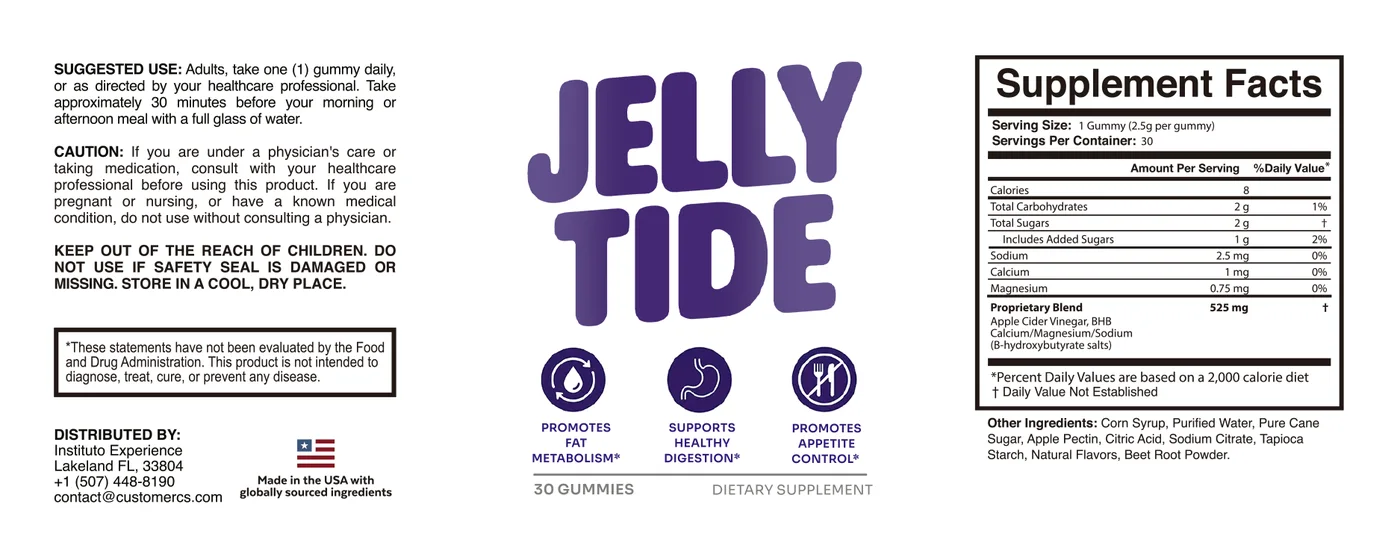
If you are shortlisting the best gut health supplement for bloating and constipation, the Other Ingredients line tells you more about how you will feel than the marketing claim does. The full JellyTide panel is transcribed on this site, sweetener line included.
Check Today's OfferHow the polyols compare
They are not interchangeable. The table sets out roughly how each behaves, using absorption as the organising idea, because absorption determines how much reaches the bacteria that cause the symptoms.
| Polyol | Absorbed in small intestine | Fermented in colon | Relative digestive tolerance | Strength of human tolerance evidence |
|---|---|---|---|---|
| Erythritol | Mostly, then excreted in urine | Very little | Highest of the group | Good; several controlled dosing studies |
| Xylitol | Partial | Yes | Moderate | Good; also studied for dental outcomes |
| Isomalt | Poor | Yes | Moderate to low | Moderate; fewer independent trials |
| Maltitol | Partial | Yes | Moderate to low | Moderate |
| Sorbitol | Poor and slow | Yes | Low | Good; carries a US laxative-effect labelling rule |
| Mannitol | Poor | Yes | Lowest of the group | Good; carries a US laxative-effect labelling rule |
One column is missing on purpose: a milligram figure for your personal limit. Nobody can supply it, because it depends on variables no label can see.
Why the same dose affects two people differently
Four things move the line, and knowing them turns a mystery into a manageable experiment.
Baseline gut sensitivity. People with irritable bowel syndrome frequently report symptoms at amounts that others do not notice. Polyols are one of the categories restricted on a low-FODMAP protocol for exactly this reason, and that protocol is a clinical tool, not a wellness trend. If you have a diagnosed gut condition, this is a conversation for your clinician rather than a comparison table.
Transit time. The faster material moves, the less opportunity there is for slow passive absorption in the small intestine, so more polyol reaches the colon. Anything that speeds transit — caffeine, stress, some medications — effectively lowers your tolerance that day.
Bacterial capacity. Gut communities differ in how vigorously they ferment particular substrates, and they adapt over weeks. Some people find that a dose which caused gas in week one is uneventful by week four. Others never adapt.
Delivery. The same daily total taken with food and split into two or three portions is usually far better tolerated than one serving taken on an empty stomach with a glass of water. This is the easiest lever to pull and the one most often ignored.

What the JellyTide label says about all this
It is worth putting the theory against a real product. The JellyTide Other Ingredients line reads corn syrup, purified water, pure cane sugar, apple pectin, citric acid, sodium citrate, tapioca starch, natural flavours and beet root powder. There is no sorbitol, no maltitol, no xylitol and no erythritol on it. The gummy is sugar-sweetened, and the panel declares 2 grams of total sugars with 1 gram added, at 8 calories per gummy.
That single fact removes the entire polyol tolerance question from this product and replaces it with different ones. Apple cider vinegar is acidic, and acidity can aggravate reflux in people prone to it, which is why the suggested use on the label specifies taking the gummy about thirty minutes before a meal with a full glass of water. The blend also contains beta-hydroxybutyrate mineral salts, and mineral salts in quantity can loosen stools — though at the milligram amounts this panel declares, that is a theoretical concern rather than a practical one. The full arithmetic on how much of the 525 mg blend can be ketone salt is set out in our label breakdown of JellyTide.
Other gut health supplement side effects worth knowing
Polyols get the attention, but they are only one entry on a longer list. If you are comparing products, these are the mechanisms that actually generate complaints.
Fermentable fibers. Inulin and chicory root fiber are added to many gummies as bulk. They are genuinely good substrates for gut bacteria, which is the point — and also the reason a product sold for bloating can produce bloating in the first fortnight. The dose matters far more than the marketing, and the difference between soluble and insoluble fiber decides how much of that fermentation you get.
Acidity. Vinegar-based products, effervescent formats and anything with added citric acid can irritate a sensitive oesophagus and, over time, are worth keeping away from teeth. Water helps; sipping slowly does not.
Mineral load. Magnesium in the citrate or oxide form is used deliberately as a laxative at gram doses. In a multi-ingredient supplement it can nudge stool consistency without anyone intending it.
Interaction and timing. Fiber-heavy or gel-forming products can slow the absorption of medication taken at the same time. Separating them by a couple of hours is standard advice and costs nothing. Related reading: our comparison of psyllium versus glucomannan for fullness covers the gel-forming category in detail.
None of this makes supplements dangerous. It makes them ordinary: substances with dose-dependent effects, some of which are unwelcome. Almost every complaint filed under the heading of gut health supplement side effects resolves into one of those four mechanisms, and each of them is manageable by changing the amount or the timing rather than abandoning the product.
How to test your own tolerance in a week
The method is unglamorous and it works. Start at one serving a day, taken with food, and hold it there for five to seven days before changing anything. Keep three notes each day: what you took, when you took it, and what you noticed in the following six hours. That is enough to separate a real pattern from a coincidence, and it is the same logic a dietitian would apply.
If symptoms appear, halve the amount rather than abandoning it, and split what remains across two servings. If they persist at the lower amount, the ingredient does not suit you and no amount of persistence changes that. If nothing happens, you have your answer and you can stop keeping notes.
One caution about the internet's favourite shortcut. Reading a hundred anecdotes about a product tells you very little, because the population contains both people who tolerate polyols easily and people who do not, and both are writing. Your own week of notes is worth more than all of it.
What this cannot do
Being explicit about the boundaries is more useful than reassurance.
This is not a diagnosis. Bloating, cramping and altered bowel habit have many causes, most of which have nothing to do with sweeteners. Blood in the stool, unintended weight loss, persistent pain, vomiting or a sudden lasting change in bowel habit are reasons to see a doctor promptly, not reasons to change supplement brands. Nothing described here diagnoses or manages any disease.
Avoiding polyols does not fix a gut. Removing a trigger can reduce symptoms. It does not address why the gut is sensitive, and prolonged elimination of fermentable carbohydrates without professional guidance can narrow a diet in ways that are unhelpful over time.
No supplement here is a laxative substitute. If constipation is the problem, the evidence-supported first moves are fluid, fiber from food, movement and, where appropriate, a product designed for the job under pharmacist or clinician advice.
Individual results vary, genuinely. That phrase is a legal formula, but in this specific area it is also the scientific finding. Tolerance is one of the most variable measurements in nutrition.
Medical note: this article is general wellness information, not medical advice, and it summarises published evidence rather than making a product claim. JellyTide is a dietary supplement, not a drug, and is not intended to diagnose, treat, cure or prevent any disease. Speak to a healthcare professional before starting any supplement, especially if you are pregnant, nursing or taking medication.
Frequently asked questions
How much sugar alcohol is too much in one day?
There is no single number, but US labelling rules give a useful anchor: a food likely to deliver about 50 grams of sorbitol or about 20 grams of mannitol a day must carry a laxative-effect statement. Many people notice gas well below those amounts, and sensitive people react to a fraction of them.
Which sugar alcohol is easiest on the stomach?
Erythritol is generally the best tolerated, because most of it is absorbed in the small intestine and leaves in the urine rather than being fermented in the colon. Sorbitol and mannitol tend to be the least well tolerated, with maltitol and xylitol somewhere in between.
Do JellyTide gummies contain sugar alcohols?
No. The published ingredient statement lists corn syrup, purified water, pure cane sugar, apple pectin, citric acid, sodium citrate, tapioca starch, natural flavours and beet root powder. There is no sorbitol, maltitol, xylitol or erythritol on it, so polyol tolerance is not the relevant question for this product.
How do I find my own tolerance level safely?
Change one variable at a time. Take a single serving with food for several days, keep a short note of timing and symptoms, then adjust. Splitting an amount across the day is usually better tolerated than taking it all at once. Stop and speak to a clinician if symptoms are severe or persistent.
Sources
- NIDDK (NIH) — Gas in the Digestive Tract
- Mayo Clinic — Artificial sweeteners and other sugar substitutes
- Harvard Health Publishing — Nutrition topic library
- Koutsou GA, Storey DM, Lee A, et al. Dose-related gastrointestinal response to the ingestion of either isomalt, lactitol or maltitol in milk chocolate. European Journal of Clinical Nutrition. 1996 Jan. PMID 8617186
- NIH Office of Dietary Supplements — What You Need To Know
Read the panel before you buy
Searches for where to buy apple cider vinegar gummies usually end on a sales page. Start with the ingredient statement instead: sweetener type, sugar per serving and the 525 mg blend are all published on this site.
Check Availability