Gut Health Supplements Debloat: Which Fiber Your Gut Needs More
Quick Answer: Which Fiber Actually Helps With Bloating?
If bloating comes with constipation, soluble fiber is usually the better first move: it dissolves into a gel that holds water, softens stool and makes it easier to pass. Insoluble fiber does not dissolve; it adds coarse bulk that speeds material through, which helps some people and irritates others. Neither is a debloating agent in the marketing sense, and adding either one quickly will reliably make gas worse for the first week or two before it settles.
- Soluble: oats, barley, beans, apples, psyllium. Forms a gel, is heavily fermented, and produces gas early on.
- Insoluble: wheat bran, nuts, seeds, vegetable skins. Adds bulk, ferments less, speeds transit.
- The catch: whole foods deliver a mixture. Most supplements deliver one type in isolation.

Two fibers, defined by what water does to them
The split is simpler than the jargon suggests. Put a fiber in water. If it dissolves and thickens into a gel, it is soluble. If it stays intact and sits there, it is insoluble. Everything else about how they behave in the gut follows from that one physical property.
Soluble fibers include beta-glucan from oats and barley, pectin from apples and citrus, inulin from chicory root, guar gum and psyllium husk. Insoluble fibers include cellulose and lignin, which is what gives wheat bran, nut skins, celery strings and the outer layer of a whole grain their structure. Almost no real food is purely one or the other. An apple carries pectin in its flesh and cellulose in its skin, which is exactly why the whole apple behaves differently from apple juice.
Once material reaches the colon, the two diverge sharply. Soluble fiber is an excellent bacterial substrate: it is fermented, producing short-chain fatty acids such as butyrate along with hydrogen, carbon dioxide and sometimes methane. That gas is the reason a healthy dietary change can feel uncomfortable at the start. Insoluble fiber is fermented far less, so it produces less gas, but it also adds physical bulk that stretches the bowel wall and stimulates movement.
Neither mechanism is inherently superior. They solve different problems, which is why the honest answer to "which fiber should I take" always begins with a question about your symptoms rather than a product recommendation. Once symptoms point you at the soluble side, the choice narrows quickly to psyllium or glucomannan.
Soluble fiber: gel, fermentation and short-chain fatty acids
The gel is doing most of the work. A viscous fiber slows gastric emptying, which is the mechanism behind the modest effects on post-meal blood glucose and on appetite that show up in controlled feeding studies. It holds water in the stool, which softens hard stool and, counter-intuitively, also firms loose stool by absorbing excess liquid. That two-way behaviour is why psyllium is the fiber most often used for both constipation and diarrhoea.
Fermentation is the second act. Bacteria break soluble fiber down into short-chain fatty acids, and butyrate in particular is the preferred fuel of the cells lining the colon. This is one of the better established mechanisms in gut biology and it is genuinely encouraging. It is also where marketing gets ahead of evidence: producing more butyrate in the colon is a measurement, and demonstrating that a given supplement improves a person's health through that route is a much taller order that most products have not attempted.
The practical downside of good fermentation is gas. Inulin and chicory root fiber are among the most enthusiastically fermented substrates in the food supply, which is why they show up both in products marketed for gut comfort and in the complaints about those products. If a fiber makes you gassy, it is usually working exactly as described; the question is whether you want that trade. Fiber is not the only fermentable load in a supplement either — sugar alcohols and digestive tolerance explains the other common source of the same symptoms.
Compare on grams, not on claims
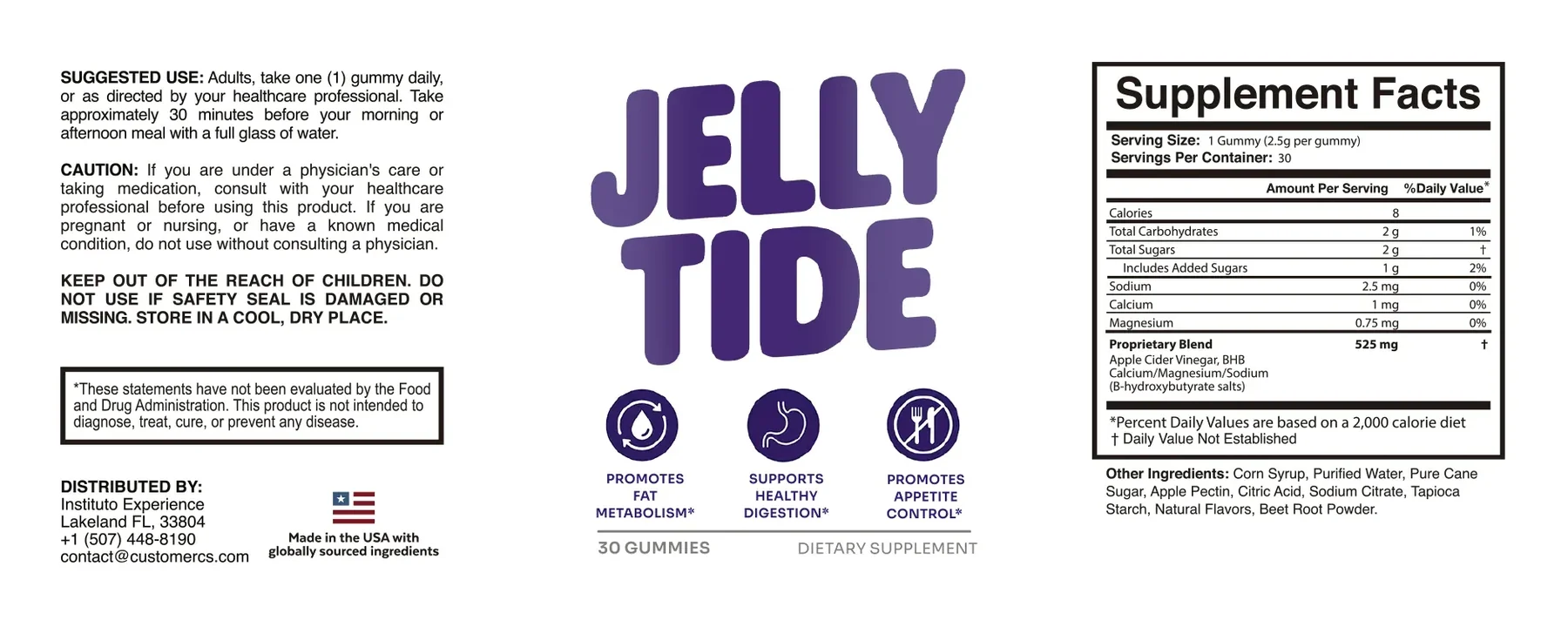
Anyone hunting for the best fiber supplement for gut health and weight loss should be reading grams per serving before anything else. The full JellyTide Supplement Facts panel, including the 525 mg blend and the pectin line, is transcribed on this site.
Check Today's OfferInsoluble fiber: bulk, and the speed of the queue
Insoluble fiber works mechanically. It does not dissolve, so it passes largely intact, adding weight and volume to stool. That bulk stretches the bowel wall, which triggers the muscular contractions that move contents along. The result is faster transit and, for many people with sluggish bowels, more regular and easier movements.
Wheat bran is the classic example and it has the longest research history of any fiber for stool frequency and weight. That history is not uniformly positive, which is the honest part. In people with irritable bowel syndrome, coarse bran has been reported to worsen pain and bloating rather than relieve it, and this is one of the more consistent findings in the field. "Add bran" was standard advice for decades and turned out to be poor advice for a substantial subgroup.
The other thing insoluble fiber does is carry water with it, which is why fluid intake is not an optional extra. Adding bulk without adding water is the single most common way to make constipation worse while believing you are addressing it.
Fiber is not a single ingredient with a single effect. It is a category of physically different materials that happen to share a definition, and pretending otherwise is how people end up taking the wrong one for a year.
Side by side
The table compares the two on the properties that actually determine how they feel, along with an honest read on how strong the human evidence is for each claimed effect.
| Property | Soluble fiber | Insoluble fiber |
|---|---|---|
| Common sources | Oats, barley, beans, apples, citrus, psyllium, chicory inulin | Wheat bran, whole grains, nuts, seeds, vegetable skins |
| Behaviour in water | Dissolves, forms a viscous gel | Stays intact, holds water on its surface |
| Fermented by gut bacteria | Extensively | Slightly to moderately |
| Gas produced early on | High, settles over one to three weeks | Lower |
| Typical supplement dose in trials | Roughly 3 to 10 g per day, split | Roughly 10 to 30 g per day from bran |
| Effect on stool | Softens hard stool, firms loose stool | Bulks and speeds transit |
| Evidence for cholesterol support | Moderate to strong for viscous types | Weak |
| Evidence for constipation relief | Moderate | Moderate, but poorly tolerated in IBS |
| Evidence for reducing bloating | Weak to moderate, and only when constipation is the cause | Weak; may worsen it in sensitive people |

Whether gut health supplements debloat anything at all
Here is the uncomfortable part. "Debloat" is a marketing word, not a physiological one, and the claim that gut health supplements debloat rests on a chain that has to hold at every link: the product reaches the gut, changes something measurable, and that change reduces the sensation of distension in a way that a placebo would not. Very few products in this category have been tested end to end against that standard.
What is better supported is narrower and more useful. If bloating is driven by constipation, relieving the constipation reduces the bloating, and fiber supplementation has moderate evidence for relieving chronic constipation in adults (van der Schoot et al., American Journal of Clinical Nutrition, 2022). That is a real, defensible chain. If bloating is driven by something else — a fermentation-sensitive gut, a food intolerance, coeliac disease, motility issues or simply eating quickly — adding fermentable fiber can make it worse, not better.
So the sensible framing when comparing options for the best gut health and debloat supplement is not "which product debloats" but "what is causing my bloating, and does this ingredient address that cause". If you cannot answer the first half, the second half cannot be answered either, and a supplement is a guess with packaging.
Dose, ramp-up and water: the part everyone skips
Three rules cover most of the practical failures we see people describe.
Go slowly. Increase by two to three grams every few days rather than jumping to a full dose. The bacterial community adapts over weeks, and the discomfort people blame on a product is usually the speed of the change rather than the product itself.
Split it. The same daily amount divided across meals produces less gas than one large serving, for the same reason a slow drip floods less than a bucket.
Drink. Every gram of fiber needs water to do its job. Viscous fiber taken with too little fluid is genuinely unpleasant, and in rare cases with tablet-form gel-formers it has caused oesophageal obstruction. Take gel-forming fibers with a full glass of water, upright, and never immediately before lying down.
One more: keep fiber and medication a couple of hours apart. Gels slow absorption, and that applies to useful molecules as well as to sugar.
Where gummies and capsules actually fit
Format determines dose ceiling, and dose ceiling determines whether a product can do what fiber does in trials. A clinical fiber dose is measured in grams. A gummy weighs two to three grams in total, most of which is sugar, water and gelling agent. The arithmetic does not leave room for a fiber dose, which is why most fiber gummies deliver a fraction of what a spoon of psyllium powder delivers for a fraction of the effort.
This is worth being precise about with the product this site covers. The JellyTide ingredient statement lists apple pectin, and pectin is a genuine soluble fiber. But it is present as a setting agent that gives the gummy its texture, in a fraction of a gram, not as a fiber dose. Nothing on the panel claims otherwise, and reading it as a fiber product would be a misreading. Our breakdown of what the JellyTide label actually declares works through the 525 mg blend line by line, and the same arithmetic applies to the sweetener question we cover in sweeteners and the gut microbiome.
If you want the fiber effect, buy fiber: psyllium husk, ground flaxseed, oat bran or a labelled fiber supplement with grams on the panel. If you want the convenience of a gummy for a different ingredient, that is a legitimate reason to buy one — just do not expect it to do two jobs.
What fiber cannot do
The limits deserve as much space as the benefits.
It cannot diagnose or manage disease. Nothing on this page treats, cures or prevents any condition. Bloating with weight loss, blood, persistent pain, vomiting or a lasting change in bowel habit needs a clinical assessment, and coeliac disease in particular is commonly missed for years while people experiment with diets.
It cannot fix bloating that is not constipation. This is the single most common mismatch. Fermentable fiber added to a fermentation-sensitive gut makes symptoms worse, and doing it for longer does not help.
It cannot replace the rest of the diet. Supplemental fiber delivers one isolated compound. Food delivers a mixture along with polyphenols, resistant starch and micronutrients that no capsule reproduces. Trials that improve outcomes with fiber-rich diets are not evidence for fiber-rich pills.
It cannot work instantly. Stool changes take days; adaptation to fermentation takes weeks. A product promising a flat stomach overnight is describing water loss or a laxative effect, neither of which is what anyone actually wants.
Medical note: this article is general wellness information, not medical advice, and it summarises published evidence rather than making a product claim. JellyTide is a dietary supplement, not a drug, and is not intended to diagnose, treat, cure or prevent any disease. Speak to a healthcare professional before starting any supplement, especially if you are pregnant, nursing or taking medication.
Frequently asked questions
Which fiber is better for bloating, soluble or insoluble?
It depends on the cause. If bloating comes with constipation, soluble fiber such as psyllium is usually the gentler first choice because it softens stool without the coarse bulk of bran. If stools are already soft and frequent, more fiber of either kind is unlikely to help and may add gas.
How much fiber should an adult get in a day?
Most adult intake guidance sits in the range of 25 to 38 grams a day depending on age and sex, and average intake in many countries is roughly half of that. Food sources count toward the total, and most people close the gap faster with beans, oats, fruit and vegetables than with a supplement.
Why does fiber make me more bloated at first?
Gut bacteria ferment soluble fiber and release gas as a by-product. When intake rises quickly the gas production rises with it. Increasing by a few grams every few days, spreading it across meals and drinking more water usually settles this within one to three weeks.
Do fiber gummies contain a meaningful dose?
Usually not. Clinical fiber doses are measured in grams, and a typical gummy weighs two to three grams in total including sugar and gelling agents. Check the grams of fiber per serving on the panel and compare it against the amount used in research before assuming the format delivers a real dose.
Sources
- Mayo Clinic — Dietary fiber: essential for a healthy diet
- Harvard T.H. Chan School of Public Health — Fiber
- NIDDK (NIH) — Gas in the Digestive Tract
- van der Schoot A, Drysdale C, Whelan K, et al. The effect of fiber supplementation on chronic constipation in adults: an updated systematic review and meta-analysis of randomized controlled trials. American Journal of Clinical Nutrition. 2022 Oct 6. PMID 35816465
- NIH Office of Dietary Supplements — fact sheet library
Read the panel, then choose
Before comparing options in the apple cider vinegar gummies gut health category, look at what each panel actually declares per serving. The JellyTide Supplement Facts are published here in full, blend total included.
Check Availability