Best Appetite Suppressant for Weight Loss in 2026
Quick Answer: What Is the Best Appetite Suppressant for Weight Loss?
The best appetite suppressant for weight loss is the one you can take consistently with few side effects. For most buyers that means a stim-free option that works by physical fullness — soluble fiber such as glucomannan, or a transparent-label fiber jelly — rather than a stimulant diet pill. It aids a calorie deficit; it does not replace one.
- Mechanism matters: physical fullness from soluble fiber avoids the jitters and sleep problems of stimulants.
- Transparency matters: pick a published, checkable label over a hidden proprietary blend.
- Adherence matters: the format you will actually take daily beats the “stronger” one you quit.

If you have ever done everything right at lunch and still found yourself raiding the cupboard at 4pm, you already understand why the search for the best appetite suppressant for weight loss is one of the most popular in the whole supplement market. Appetite is not a willpower problem you can shame away. It is a physiological signal, and the products that work with that signal tend to age better than the ones that try to override it with a jolt of stimulants.
This guide ranks the main appetite suppressant options a real buyer will run into in 2026 — soluble-fiber jelly, glucomannan capsules, saffron extract and stimulant diet pills — and explains what each one actually does, what the evidence supports and where the honest limits are. Along the way we will show where a stim-free fiber jelly such as JellyTide fits, and, just as importantly, where it does not.
What an appetite suppressant actually does
The phrase “appetite suppressant” covers two very different mechanisms that get lumped together on shelf labels. The first is chemical: stimulants such as caffeine and its relatives blunt hunger signalling in the brain and raise your metabolic rate slightly. The second is mechanical: soluble fibers absorb water, swell and add volume to the stomach, so you feel full sooner and stay full a little longer. Both can reduce how much you eat. Only one of them keeps you awake at midnight.
The mechanical route is the quieter, more forgiving option, and it is the reason fiber keeps reappearing at the top of dietitian shortlists. Glucomannan, the soluble fiber extracted from konjac root, is the headline example: it can absorb up to about fifty times its own weight in water, forming a thick gel that takes up room in the stomach. Pooled randomised trials of glucomannan supplements report only small average weight differences against placebo (Onakpoya et al., Journal of the American College of Nutrition, 2014). That gel slows how quickly the stomach empties and flattens the after-meal blood-sugar curve, both of which nudge appetite in the right direction. None of this is exotic or unproven biology. What is contested is how large the effect is over weeks and months, which we will come back to.
The critical thing to understand before you spend a penny is that no appetite suppressant, stim-free or otherwise, works in isolation. Every credible option is an aid to an energy deficit, not a substitute for one. Even the authorised European health claim for glucomannan is conditional on an energy-restricted diet. Any product that implies you can eat as before and still melt away is selling a fantasy, and usually a stimulant.
The best appetite suppressant for weight loss: ranking the main options
Here is how the four categories most buyers compare actually stack up. The evidence column is deliberately honest — it describes how strong the human trial record is, not how impressive the mechanism sounds on a sales page.
| Option | How it works | Evidence | Jitters? | Best for |
|---|---|---|---|---|
| Soluble-fiber jelly (e.g. JellyTide) | Physical fullness from a gel-forming, stim-free jelly format | Fiber mechanism well established; dose in any jelly is modest | None | People who want a jitter-free, easy-to-take daily option |
| Glucomannan capsules | Soluble fiber expands up to ~50x its weight in the stomach | Mixed but promising; effect small, diet-dependent | None | Buyers happy to swallow several large capsules with water |
| Saffron extract | May influence mood and snacking urges | Small, early-stage trials; modest effect on snacking | None | People whose main issue is emotional or between-meal snacking |
| Stimulant diet pills | Caffeine and thermogenics blunt hunger chemically | Real short-term appetite effect; tolerance builds | Yes — common | Stimulant-tolerant users who train early in the day |
The pattern is clear. The stim-free, fullness-based options carry no jitter penalty and a reasonable, if modest, mechanism. Stimulant pills can suppress appetite more sharply in the short term but bring caffeine’s familiar costs: disturbed sleep, a faster resting heart rate, and a tolerance curve that erodes the effect within weeks. If your goal is a suppressant you can take every day for months without your body pushing back, the stim-free column is where sensible buyers start. For a deeper head-to-head on the pill side of this decision, our breakdown of weight loss pills versus a fiber jelly walks through the trade-offs line by line.
Where JellyTide fits — and where it doesn’t
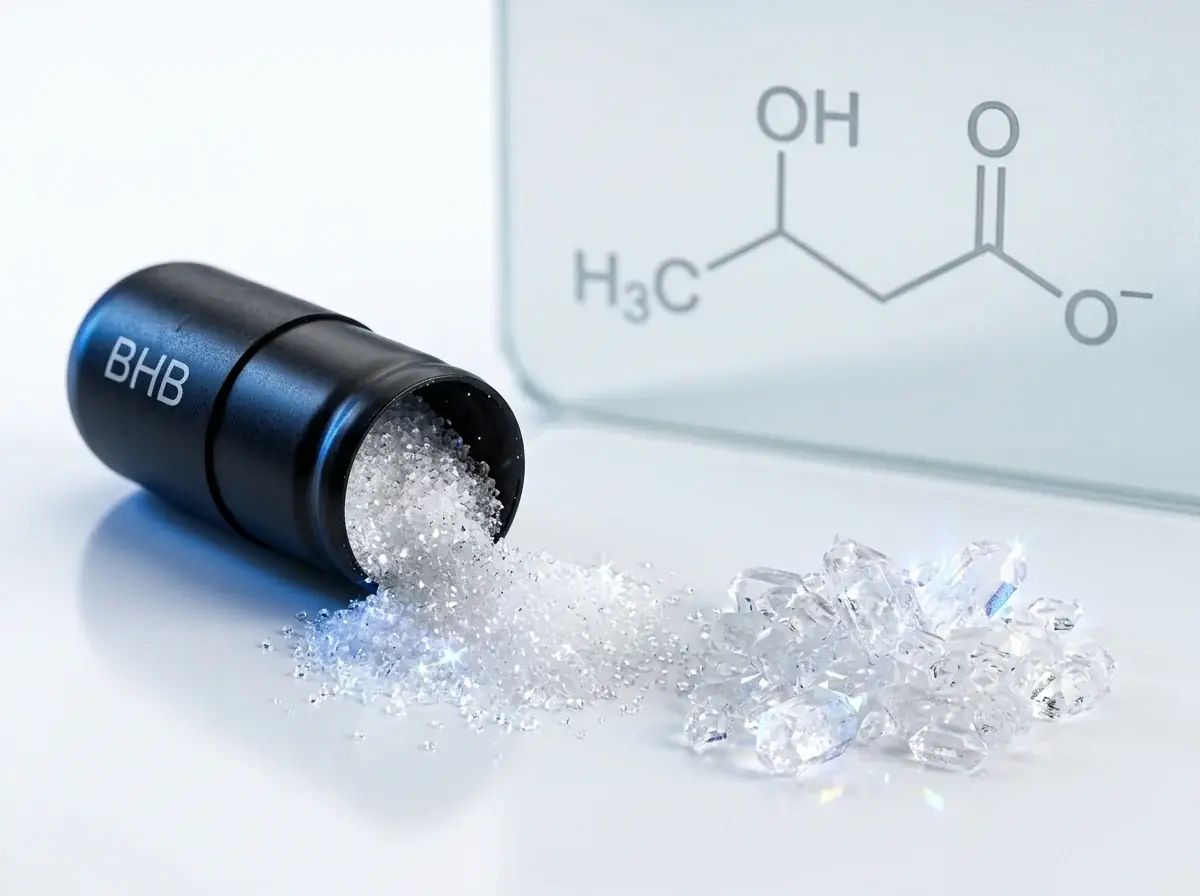
JellyTide is a once-daily jelly-format supplement built around a 525 mg blend of apple cider vinegar and beta-hydroxybutyrate (BHB) mineral salts, with apple pectin — itself a soluble, gel-forming fiber — giving the jelly its texture. Two things make it a rational pick in this category. First, it is completely stim-free, so there are no jitters, no afternoon crash and nothing to interfere with sleep. Second, its full Supplement Facts panel is published and checkable, which is rarer than it should be in a market built on hidden proprietary blends.
We are equally clear about the limits, because that is the whole point of a label-checked site. A jelly cannot physically hold a gram-scale clinical fiber dose the way a tub of powder can, so JellyTide is best understood as a convenient, transparent, stimulant-free daily habit that supports a calorie deficit — not a mega-dose fiber product. If a concentrated soluble-fiber dose is specifically what you are after, glucomannan powder will get you there more directly, a distinction we lay out in our guide to a natural appetite suppressant that actually works. Honest positioning is the only kind that survives contact with a buyer who reads the panel.
See the stim-free option on today’s offer
If a jitter-free, transparent-label jelly is the direction you want, check the current JellyTide pricing, bundle options and money-back guarantee before you commit.
Check Today’s OfferStim-free versus stimulant diet pills
Stimulant diet pills are seductive because they work fast. Caffeine genuinely reduces appetite and lifts energy in the first week or two, and that early “this is working” feeling drives a lot of repeat purchases. The problem is that the body adapts. Tolerance builds, the appetite effect fades, and you are left with the side effects — poorer sleep, a jittery baseline, sometimes a raised heart rate or blood pressure — long after the hunger benefit has worn off. For anyone with anxiety, high blood pressure, or a job that already runs on too little sleep, that trade is a poor one.
Stim-free suppressants ask for patience in exchange for staying power. The fullness from soluble fiber does not spike and crash; it simply makes a sensible portion feel like enough, meal after meal, without a chemical debt to repay at bedtime. For a daily, long-horizon weight-management habit, that steadiness is worth more than a dramatic first week. It is also why we generally steer readers toward the fullness route unless they specifically want and tolerate stimulants.
How a fiber jelly is different from diet pills
Two differences matter to a buyer. The first is mechanism: a fiber jelly works mechanically, adding gentle volume and slowing gastric emptying, while a typical diet pill works chemically through stimulants. That single fact explains the jitter gap between them. The second is adherence. A meaningful capsule dose of gel-forming fiber can mean swallowing several large capsules multiple times a day, and most people quietly stop. A once-daily jelly is far easier to keep taking, and the suppressant you actually take beats the one gathering dust in a drawer.
The honest caveat, again, is dose. The very format that makes a jelly pleasant — a small, soft, few-gram piece — also caps how much fiber it can carry. So the right way to read a fiber jelly is as a stim-free, easy, transparent daily habit, not as a substitute for a therapeutic fiber load. If you want the underlying fiber-science comparison in depth, our note on psyllium versus glucomannan for fullness covers the gel-forming category and its dose arithmetic.

Three objections worth answering honestly
“Don’t I need a stimulant for it to actually work?” No. Stimulants feel stronger, but the fullness route reduces intake without the sleep and heart-rate costs, and it does not fade the way caffeine tolerance does. The real lever in every case is the calorie deficit the suppressant helps you hold; the fewer side effects standing between you and consistency, the better your odds.
“Aren’t all these products just expensive placebo?” Some are, especially those hiding a token dose behind a proprietary-blend label. That is exactly why transparency is a ranking criterion here. A published panel lets you check what you are paying for. A hidden total does not. Reading the Supplement Facts before the sales copy is the single most reliable way to avoid an expensive placebo.
“Fiber gives me bloating and gas.” Usually that is the speed of the increase, not the fiber itself. Start low, build up over a week or two, and take every dose with a full glass of water. Hydration is not optional with gel-forming fiber — it is the specific condition under which it is both comfortable and safe.
Medical note: this article is general wellness information, not medical advice, and it summarises published evidence rather than making a product claim. JellyTide is a dietary supplement, not a drug, and is not intended to diagnose, treat, cure or prevent any disease. Speak to a healthcare professional before starting any supplement, especially if you are pregnant, nursing or taking medication.
Related reading
Frequently asked questions
What is the best appetite suppressant for weight loss?
There is no single winner for everyone. For most people who want fewer side effects, a stim-free option that works by physical fullness is the sensible default: soluble fiber such as glucomannan, or a transparent-label fiber jelly like JellyTide, rather than a stimulant diet pill. The best appetite suppressant is the one you can take consistently, with enough water, alongside a modest calorie deficit.
Are appetite suppressants safe to take daily?
Stim-free fiber-based options are generally well tolerated day to day when taken with a full glass of water and started at a low dose. Stimulant diet pills are a different matter, because caffeine and similar compounds can affect sleep, heart rate and blood pressure. Anyone who is pregnant, nursing, taking medication or managing a health condition should check with a doctor or pharmacist first.
Do stimulant-free appetite suppressants actually work?
They can help, within limits. Soluble fibers such as glucomannan absorb water and expand in the stomach, which increases the sense of fullness and can make a calorie deficit easier to hold. The effect is real but modest, and it depends on dose, timing and hydration. No stim-free suppressant removes appetite entirely or replaces a sensible diet.
How is a fiber jelly different from diet pills?
A fiber jelly works mechanically by adding gentle volume and texture in the stomach, and it has no stimulant load, so there are no jitters. Many diet pills lean on caffeine or thermogenic stimulants to blunt appetite chemically. The jelly format is also easier to take than a handful of large capsules, though any jelly or gummy is limited in how much fiber it can physically hold.
Sources
- Onakpoya I, Posadzki P, Ernst E. The efficacy of glucomannan supplementation in overweight and obesity: a systematic review and meta-analysis of randomized clinical trials. Journal of the American College of Nutrition. 2014. PMID 24533610
- NCCIH (NIH) — Dietary and Herbal Supplements
- Harvard T.H. Chan School of Public Health — Fiber
- Mayo Clinic — Weight-loss basics
- NIH Office of Dietary Supplements — Dietary Supplements for Weight Loss
Compare it against your shortlist
Whatever ends up on your list, start with a stim-free, transparent-label option. Check current JellyTide availability, bundles and the money-back guarantee before you decide.
Check Availability