Weight Loss Supplement Buyer's Guide 2026
Quick Answer: How Do You Choose a Weight Loss Supplement?
Choose a weight loss supplement the way you would vet any purchase you plan to swallow daily: demand a fully transparent label, check that each dose matches published human trials, and reject aggressive claims. Fiber-first picks have the most consistent evidence and the fewest surprises, which makes them the safest place for most people to start.
- Transparency: every active ingredient shown with its exact amount, not buried in a blend.
- Clinical dose: the amount trials actually used, not a token sprinkle for the label.
- Fiber-first: the lowest-risk, best-evidenced starting category for appetite support.
Search interest in the phrase weight loss supplement runs to roughly twenty-seven thousand queries a month, and the shelf that greets those searchers is a wall of near-identical promises. Every bottle claims to accelerate metabolism, curb cravings and flatten a stomach; almost none of them explains, in plain numbers, what is actually inside. This guide is about closing that gap. By the end you will be able to pick up any weight loss supplement, turn it around, and know within thirty seconds whether it deserves your money or your suspicion.
We are an affiliate publisher, so we have skin in the game and we will say so up front. That is exactly why we lead with the label rather than the sales copy: the fastest way to lose a reader's trust is to sell them something the panel cannot support. The method below is the same one we apply to the product on this site, and we would rather you use it to reject a bad product than buy a good one blind.
What a weight loss supplement can and cannot do
Start with the boundary, because most disappointment lives on the wrong side of it. A supplement is a support, not an engine. Body fat leaves when energy out exceeds energy in over weeks and months, and no capsule rewrites that arithmetic (NIH Office of Dietary Supplements, weight-loss supplements). What the better ingredients can do is make the arithmetic easier to sustain: blunt the edge of hunger, add a sense of fullness before a meal, smooth the blood-sugar swing that drives an afternoon raid on the biscuit tin. Those are real, useful, and modest.
The trouble is that "modest but real" does not sell as well as "melts fat while you sleep," so the market inflates. When you read a claim, mentally translate it back into the boring mechanism underneath. "Torches stubborn belly fat" almost always means "may slightly increase fullness." "Resets your metabolism" usually means "contains caffeine." Once you can perform that translation reflexively, half the shelf disqualifies itself.
How to read a weight loss supplement label like a skeptic
The single most useful habit is to ignore the front of the pack entirely for the first minute and read only the Supplement Facts panel and the ingredient statement. Three questions answer almost everything.
Is every amount disclosed? A trustworthy panel lists each active ingredient followed by its quantity in milligrams or grams. If several ingredients are grouped under one combined figure, you are looking at a proprietary blend, and you have lost the ability to check any single dose. That is not automatically disqualifying, but it moves the product down your list, and we explain exactly why in our breakdown of what a proprietary blend total actually hides.
Do the amounts match the research? This is where most products quietly fail. A label can name a fashionable ingredient and include a fraction of the dose used in the trials it is riding on. The ingredient is technically present; the effect is not. Knowing the studied range for a handful of common ingredients is the difference between buying evidence and buying a sticker.
Will you actually take it? The best-dosed powder in the world does nothing at the back of a cupboard. Format, taste and the number of pieces per day decide adherence, and adherence decides results. A slightly weaker product you take every day beats a perfect one you abandon in a week.

Are proprietary blends a red flag?
Here is the honest answer the category rarely gives: a blend is a caution flag, not a confession. Legitimate manufacturers sometimes use them to protect a genuinely novel formula, and a blend can still be well made. But the structure works in the seller's favour and against yours. Because only the combined total is published, the maker can load the blend with a cheap, heavy filler and add a whisper of the expensive, marketable ingredient, and the label looks identical either way. You are asked to trust that the split is generous. In a category with this much money and this little oversight, trust is expensive.
Our default rule is simple. When two products are otherwise comparable, the one with a fully transparent panel wins, every time. A blend has to earn its place by offering something a transparent competitor cannot, and most do not clear that bar.
Vet this label with the same checklist
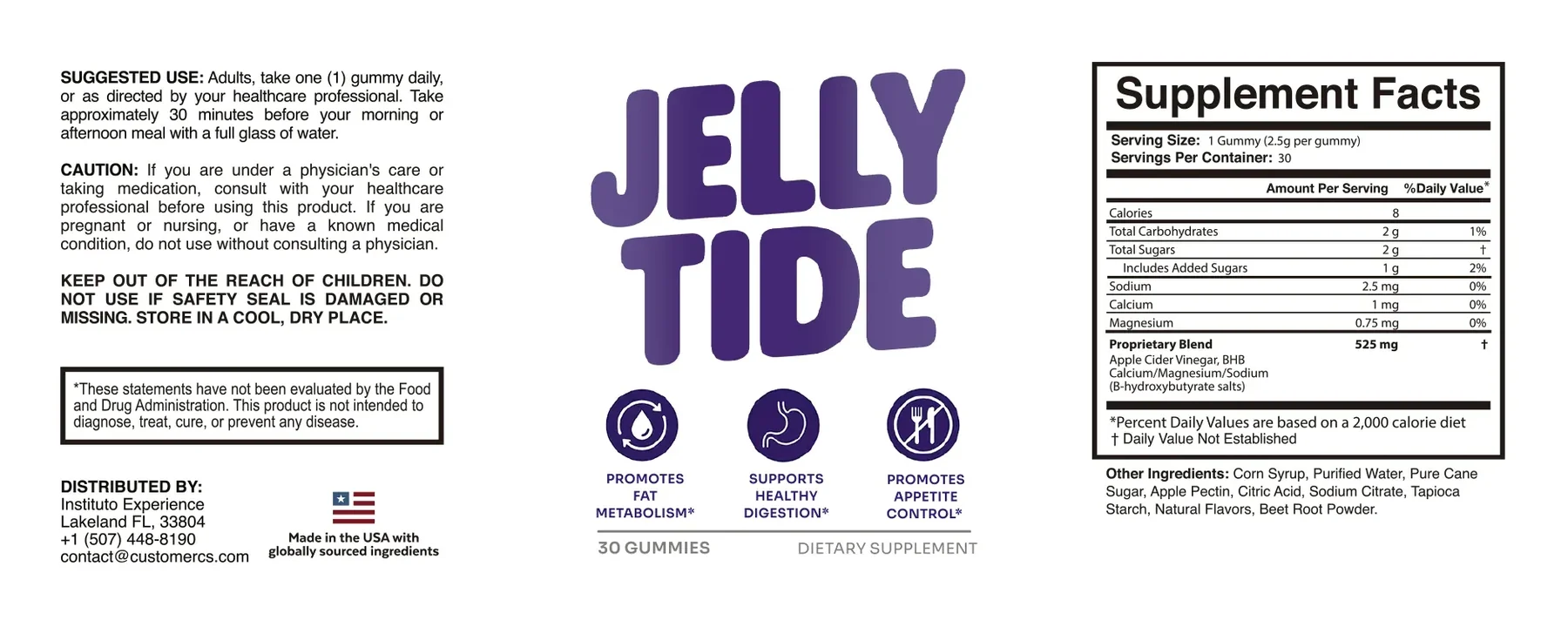
The full JellyTide Supplement Facts panel, including the 525 mg blend of apple cider vinegar and BHB mineral salts, is transcribed on this site so you can apply every question above before you decide.
Check Today's OfferWhat counts as a clinical dose
A clinical dose is the amount an ingredient was actually given in the human studies people cite when they market it. It is not the amount that fits neatly on a label, and it is emphatically not "any detectable quantity." The gap between the two is where the category earns its bad reputation.
Fiber is the clearest example. The soluble fibers studied for fullness and cholesterol support are used in grams per day, often five or more, split across doses (Harvard T.H. Chan School of Public Health on dietary fiber). A gummy or a small capsule physically cannot hold that much active fiber, which is why so many "fiber" products in fun formats deliver a fraction of a studied amount. Botanical extracts work differently: many are standardised to a specific percentage of an active compound and then dosed to a particular milligram target, so both numbers have to be right. Caffeine and a few stimulants are among the few ingredients where a small amount does something measurable, which is precisely why they are so common in this aisle.
You do not need to memorise a pharmacology textbook. You need a rough sense of the studied range for the two or three ingredients a given product leans on, and the willingness to look them up. When the panel lists far less than the trials used, expect the trial's headline result to be far less likely to show up in your life.
Why fiber-first is the safest starting point
If you want one durable principle to organise this whole category, it is this: start with fiber. Not because fiber is glamorous, but because it is the rare weight-management tool where the mechanism, the safety profile and the everyday evidence all point the same way. Soluble fiber absorbs water and forms a gel that slows stomach emptying, which increases the sense of fullness and softens the post-meal blood-sugar rise. It has a decades-long safety record. And the population data linking higher fiber intake to better weight and metabolic outcomes is built on real diets, not laboratory extracts.
Fiber also fails gracefully, which matters more than people expect. The worst-case scenario for overdoing a stimulant fat-burner is a racing heart and a bad night; the worst case for overdoing fiber is some bloating that resolves when you drink more water and slow down. For a first move in an unregulated category, "the failure mode is a bit of wind" is a genuine selling point. If you are weighing whole-food fiber against an isolated pill, our comparison of which type of fiber your gut actually needs is the next thing worth reading.
Where JellyTide fits in this picture
Applying our own checklist to our own subject keeps us honest, so here it is without spin. JellyTide is an apple cider vinegar and BHB gummy built around a 525 mg blend, with apple pectin, a soluble, gel-forming fiber, as the ingredient that gives the jelly its texture. It is best understood as a low-calorie, pleasant-to-take gummy you can have before a meal, not as a gram-scale fiber supplement. The pectin is a gelling agent in a gummy, not a therapeutic fiber dose, and we would rather you know that going in than feel misled later.
What that makes JellyTide, honestly, is a convenience and habit product: a small ritual before eating, low in calories, that some people find easier to keep up than mixing a fiber powder. That can be genuinely useful for adherence, which as we keep saying is the variable that decides outcomes. What it is not is a substitute for the studied gram doses of fiber, or for the diet underneath everything. Judge it on that basis and you will not be disappointed by it; judge it as a fat-melting miracle and no product on Earth will satisfy you.
The best weight loss supplement is the honest one you will still be taking in three months, sitting on top of a diet you can actually live with. Everything else is a garnish.
The thirty-second vetting checklist
Print this, screenshot it, or just remember the shape of it. Run any product through these rows before you read a single testimonial.
| Check | Green light | Walk away |
|---|---|---|
| Label transparency | Every active ingredient shown with an exact amount | Amounts hidden inside a proprietary blend total |
| Dose vs research | Amounts match published human trials | Trace amounts of a trendy ingredient |
| Claims | Modest, specific, mechanism-based | "Melts fat," "resets metabolism," overnight results |
| Format | One you will realistically take daily | A regimen you will quietly abandon |
| Manufacturing | GMP facility, third-party context available | No facility or testing information at all |
| Guarantee | Clear refund terms you can read before buying | Vague, buried, or contradicted by fine print |
Red flags to walk away from
Some signals are strong enough to end the conversation on their own.
Before-and-after urgency. Countdown timers, "only 3 bottles left" banners and pressure to buy a year's supply today are selling techniques, not signs of quality. A supplement you will take for months does not need to be bought in the next nine minutes.
Disease language. Any product implying it treats, cures or prevents a medical condition is either breaking the rules or hoping you will not notice that it is (FTC advertising guide for the dietary supplement industry). Legitimate supplements make careful, limited claims for a reason.
Testimonial theatre. A page thick with dramatic quotes and star ratings but thin on ingredient amounts has decided which one it wants you to look at. The reverse, a page heavy on the panel and light on hype, is the healthier sign.
Stimulant stacks with no total. Blends built on caffeine and its cousins, with the caffeine amount undisclosed, are how people end up unintentionally over-caffeinated. If a product can make you jittery, you deserve to know the number.

Medical note: this article is general wellness information, not medical advice, and it summarises published evidence rather than making a product claim. JellyTide is a dietary supplement, not a drug, and is not intended to diagnose, treat, cure or prevent any disease. Speak to a healthcare professional before starting any supplement, especially if you are pregnant, nursing or taking medication.
Related reading
Frequently asked questions
What should I look for in a weight loss supplement?
Look for a fully transparent Supplement Facts panel that lists every active ingredient with its exact amount, doses that match the amounts used in published human trials, a form you will actually take every day, and modest, specific claims. Anything hiding amounts inside a proprietary blend total should drop down your list.
Do weight loss supplements actually work?
Most produce small effects at best, and only alongside a calorie deficit rather than instead of one. Fiber and protein have the most consistent evidence for helping with fullness, which can make a deficit easier to hold. No pill or gummy melts fat on its own, and any product promising that is describing marketing, not biology.
Are proprietary blends a red flag?
They are a caution flag rather than proof of a scam. A blend lists several ingredients under one combined milligram total, so you cannot tell whether any single one reaches a studied dose. Some reputable products use them, but transparency is always better for the buyer, and a blend gives the manufacturer room to under-dose the expensive ingredients.
What counts as a clinical dose?
A clinical dose is the amount of an ingredient shown to do something in published human trials, not a token sprinkle added so it can appear on the label. For fiber that usually means several grams a day; for many botanicals it is a specific standardised amount. If the panel lists far less than the trials used, expect the trial's result to be far less likely.
Sources
Ready to run the checklist for real?
Start with the panel, not the sales page. The JellyTide Supplement Facts, blend total and suggested use are published on this site in full so you can decide on the evidence.
Check Availability