Meal Replacement Shake vs Fiber Jelly
Quick Answer: Shake or Fiber Jelly?
A meal replacement shake and a fiber jelly solve different problems. A meal replacement shake swaps a whole meal's calories for a known, fixed amount, which makes portion control effortless. A low-calorie fiber jelly is not a meal at all; it is a small pre-meal add-on that adds fullness so you eat less at the next sitting. Many people use both.
- Shake: replaces a meal with controlled, complete nutrition.
- Fiber jelly: a low-calorie pre-meal nudge, not a meal.
- Both: a shake for one meal, a jelly before another you tend to overeat.

The meal replacement shake is one of the most searched tools in weight management, drawing around forty thousand queries a month, and for good reason: it turns a fraught decision into a solved one. But shoppers increasingly line it up against a very different product, the low-calorie fiber jelly, and treat them as rivals for the same slot. They are not. A shake replaces a meal; a fiber jelly changes how much you eat at a meal you still intend to have. Once you see that distinction, choosing between them, or combining them, becomes straightforward.
This guide compares the two on the jobs they genuinely do, flags where each one quietly fails, and shows how they can work together without either one crowding real food off your plate. As always, we are an affiliate publisher and we would rather you match the tool to the goal than buy the wrong one because a headline told you to.
What a meal replacement shake actually does
A meal replacement shake is, at its core, a portion-control device wearing the costume of nutrition science. Its real magic is not a metabolic trick; it is the removal of a decision. Lunch is no longer an open question with a hundred calorie outcomes, from a salad to a burrito the size of your forearm. It is one shake, one known number, poured and finished. For people who overeat at specific meals or who decision-fatigue their way into bad choices by evening, that certainty is worth more than any ingredient on the label.
A well-made shake is nutritionally complete: a solid slug of protein, a controlled dose of carbohydrate and fat, plus added vitamins and minerals so that swapping out a meal does not swap out its nutrition. The clinical literature on partial meal replacement is genuinely encouraging here. Programs that replace one or two meals a day with a complete shake, inside a structured calorie target, tend to produce reliable weight loss (Min et al., Journal of the Academy of Nutrition and Dietetics, 2021), largely because they make the calorie maths automatic rather than aspirational.
The honest weakness is dependence. A shake controls calories brilliantly while you drink it and teaches you very little about building a balanced plate. If nothing underneath changes, weight has a way of returning when the shakes stop. The best use treats a shake as training wheels for portion size and consistency, not as a permanent replacement for learning to eat.
What a fiber jelly does instead
A fiber jelly plays an entirely different position, and calling it a "mini meal" is the most common and most damaging misunderstanding. It is not a meal and it is not trying to be one. A low-calorie fiber jelly is a small serving of soluble fiber, taken shortly before eating, whose whole purpose is to make the meal that follows a little smaller. The soluble fiber meets water and forms a gel that takes up space in the stomach and slows how quickly it empties, so you arrive at the meal already carrying some fullness and tend to stop sooner.
Crucially, a true fiber jelly is low in calories. It is not replacing the meal's energy; it is trimming the meal's energy by nudging your appetite before you sit down. That makes it a companion to eating rather than a substitute for it. If you want the mechanics of how these gels form and behave, our explainer on gel-forming fibers and fullness covers the two best-studied examples in detail, and our note on soluble versus insoluble fiber explains why only one type forms the gel that matters here.
Shake vs fiber for appetite control
Line them up on the timeline of a day and the difference is obvious. The shake acts at the moment of the meal it replaces: those calories are simply swapped for a smaller, known amount. The fiber jelly acts just before a meal you still intend to eat: it does not remove those calories, it reduces how many of them you choose to consume. One is a substitution; the other is a discount voucher applied at the next checkout.
That means the honest comparison is not "which is better" but "which moment are you fixing." If your problem meal is lunch at your desk, a shake solves it cleanly. If your problem is second helpings at dinner or grazing all evening, a fiber jelly before that meal is the better-aimed tool. Use the wrong one for the wrong moment and both will underwhelm you, through no fault of the product.
See what a low-calorie fiber jelly contains
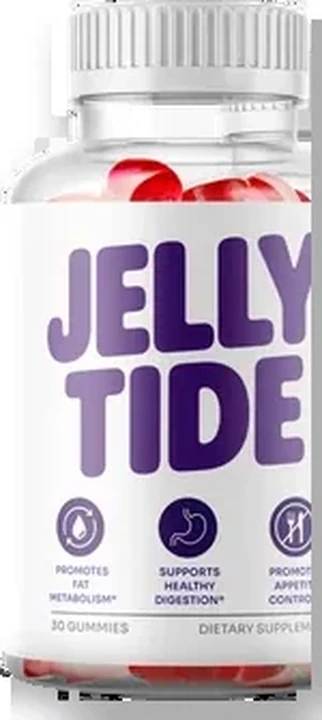
JellyTide is a low-calorie apple cider vinegar gummy that gels with apple pectin, a soluble fiber. The full Supplement Facts panel, the 525 mg blend and suggested use are published on this site so you can judge it as a pre-meal add-on.
Check Today's OfferCan I use both a shake and a fiber jelly?
Yes, and because they occupy different slots they combine cleanly rather than clashing. A workable pattern looks like this: a complete meal replacement shake stands in for the meal you most often get wrong on calories, usually a rushed lunch, while a low-calorie fiber jelly goes in a few minutes before the meal you most often overeat — the pre-meal gel position tested in randomised crossover work on gelled konjac fibre (Au-Yeung et al., British Journal of Nutrition, 2018) —, usually dinner. The shake removes one problem meal entirely; the jelly shrinks another. Between them they cover both failure modes of a normal day.
Three guardrails keep the combination healthy. Watch your daily totals, because two tools make it easy to lose track of calories and, more importantly, protein. Drink a full glass of water with the fiber jelly, since gel-forming fibers need fluid to do their job and to stay comfortable. And do not let the convenience of two products quietly push whole foods off the table, because vegetables, fruit and the fiber they carry are still doing work that no supplement replicates. On that last point, our piece on digestive tolerance and sugar alcohols is a useful reality check on what fun-format products add along with the fiber.
A meal replacement shake removes a meal you keep getting wrong. A fiber jelly shrinks a meal you keep going back to. They are not rivals; they cover different sins.
Head to head: shake vs fiber jelly
The table compares the two on the factors that decide which one, or both, belongs in your day.
| Factor | Meal replacement shake | Fiber jelly |
|---|---|---|
| What it is | A complete meal in liquid form | A low-calorie pre-meal add-on |
| Calories | Replaces a meal's calories (often 150–250) | Low; adds very little energy |
| Main job | Control the calories of the meal it replaces | Reduce intake at the next meal |
| Protein | Meaningful, part of the design | Little to none |
| When to use it | Instead of a meal you overeat | Shortly before a meal you overeat |
| Main caution | Dependence; regain if habits do not change | Needs water; not a meal; bloating if rushed |
| Best role | Automating one problem meal | Trimming a separate problem meal |

Where JellyTide fits, honestly
Because this site covers JellyTide, here is the candid placement. JellyTide is not a meal replacement shake and it is not a complete meal in any sense. It is an apple cider vinegar and BHB gummy built on a 525 mg blend, with apple pectin, a soluble fiber, as the gelling agent that gives it the jelly texture. Read it as a low-calorie pre-meal gummy, the fiber-jelly side of this comparison, and it lands sensibly; expect it to replace a meal or match the gram-scale fiber doses used in trials, and it will disappoint you, because it is designed to do neither.
What JellyTide offers in this framework is the easy, low-calorie ritual before a meal you want to keep smaller, taken because a gummy is pleasant enough to remember. It carries no protein and no meal's worth of nutrition, so it never stands in for the shake or the plate. If you would rather see the arithmetic than take our summary on trust, the label-first breakdown of JellyTide lays out precisely what the blend does and does not contain. Match the tool to the moment and it earns its small, honest place.
Two myths worth clearing up
Two beliefs cause most of the disappointment in this category.
Myth: a shake is automatically healthier than a meal. A complete, well-formulated shake can be a good swap for a meal you would otherwise get wrong, but it is not superior to a genuinely balanced plate of whole foods. It is more convenient and more controlled, which is a different virtue. The shake wins on consistency, not on nutritional ceiling.
Myth: a fiber jelly can stand in for a meal if you are busy. It cannot, and treating it that way is a fast route to being ravenous an hour later and overeating anyway. A low-calorie fiber jelly has neither the calories nor the protein to hold you, and it was never meant to. Skipping a meal in favour of a jelly is skipping a meal, full stop.
Medical note: this article is general wellness information, not medical advice, and it summarises published evidence rather than making a product claim. JellyTide is a dietary supplement, not a drug, and is not intended to diagnose, treat, cure or prevent any disease. Meal replacement programs and any large change in how you eat should be discussed with a healthcare professional, especially if you are pregnant, nursing, managing a health condition or taking medication.
Related reading
Frequently asked questions
Are meal replacement shakes good for weight loss?
They can be, mainly because they make portion and calorie control effortless: one shake is a known, fixed number of calories that removes a decision. The trials that work best use a nutritionally complete shake to replace one or two meals a day within a sensible plan. The risk is regaining once you stop, if no eating habits changed underneath.
Shake vs fiber for appetite control?
They target different moments. A meal replacement shake controls the calories of the meal it replaces, while a low-calorie fiber jelly aims to curb how much you eat at the next meal by adding fullness beforehand. A shake is a meal; a fiber jelly is a small pre-meal add-on, not a meal in itself.
Can I use both a shake and a fiber jelly?
Yes. A common pattern is a complete meal replacement shake for one meal and a low-calorie fiber jelly before a separate meal you tend to overeat. Keep total daily calories and protein in view, drink plenty of water with the fiber, and do not let two tools quietly crowd out whole foods across the day.
Do meal replacement shakes work long term?
They work long term only if they teach or support habits you keep. Shakes are excellent training wheels for portion size and consistency, but weight tends to return if you rely on them indefinitely without learning to build balanced plates. Treat them as a bridge to durable eating patterns rather than a permanent replacement for food.
Sources
- Min J, Kim SY, Shin IS, et al. The effect of meal replacement on weight loss according to calorie-restriction type and proportion of energy intake: a systematic review and meta-analysis of randomized controlled trials. Journal of the Academy of Nutrition and Dietetics. 2021 Aug. PMID 34144920
- Au-Yeung F, Jovanovski E, Jenkins AL, et al. The effects of gelled konjac glucomannan fibre on appetite and energy intake in healthy individuals: a randomised cross-over trial. British Journal of Nutrition. 2018 Jan. PMID 29202887
- NCCIH (NIH) — Weight Loss and Diet Drugs
- Harvard T.H. Chan School of Public Health — Fiber
- Mayo Clinic — Meal replacement and weight loss
Match the tool to the meal
Decide which moment you are fixing, then choose the right tool for it. The JellyTide panel, blend total and suggested use are published on this site in full so you can place the fiber jelly correctly.
Check Availability